Research
研究內容 / Research Content
研究內容
当研究室は、機械系・機械コースに所属し、次世代エネルギー材料や機能性材料の構造–物性相関の解明を通じて、エネルギー・環境・モビリティ分野への貢献を目指しています。とくに全固体電池材料を対象とし、結晶構造、イオン拡散、力学応答などの特性を分子動力学や第一原理計算を用いて解析しています。また、一部では高分子–セラミックス複合系材料の探索的研究も行われています。材料力学の視点から最先端材料研究とその応用に携わりたい学生を歓迎します。
Our laboratory belongs to the Department of Mechanical Engineering, Mechanical Course, and aims to contribute to the fields of energy, environment, and mobility through the analysis of structure–property relationships in next-generation energy and functional materials. We focus on solid-state battery materials and investigate their crystal structures, ion transport, and mechanical responses using molecular dynamics and first-principles simulations. Exploratory work is also conducted on polymer–ceramic composite systems. We welcome students who are eager to engage in cutting-edge materials research from the perspective of mechanics.
機械応力とイオン移動の相互作用解析
構造と輸送特性の相関を原子レベルで解析し、力学的刺激による電気化学特性の制御可能性を探究
ペロブスカイト構造セラミックスの力学応答と相転移挙動
相転移温度付近でのドメインスイッチング挙動とフェロエラスティック応答の特徴を解明
分子動力学解析による微視構造と物性の相関解明
原子スケールでの構造–物性相関を分子動力学シミュレーションを用いて詳細に解析
高分子–セラミック複合電解質の開発
高いイオン伝導性と機械的安定性を両立する複合電解質材料の設計と最適化
研究項目
機械応力とイオン移動の相互作用解析
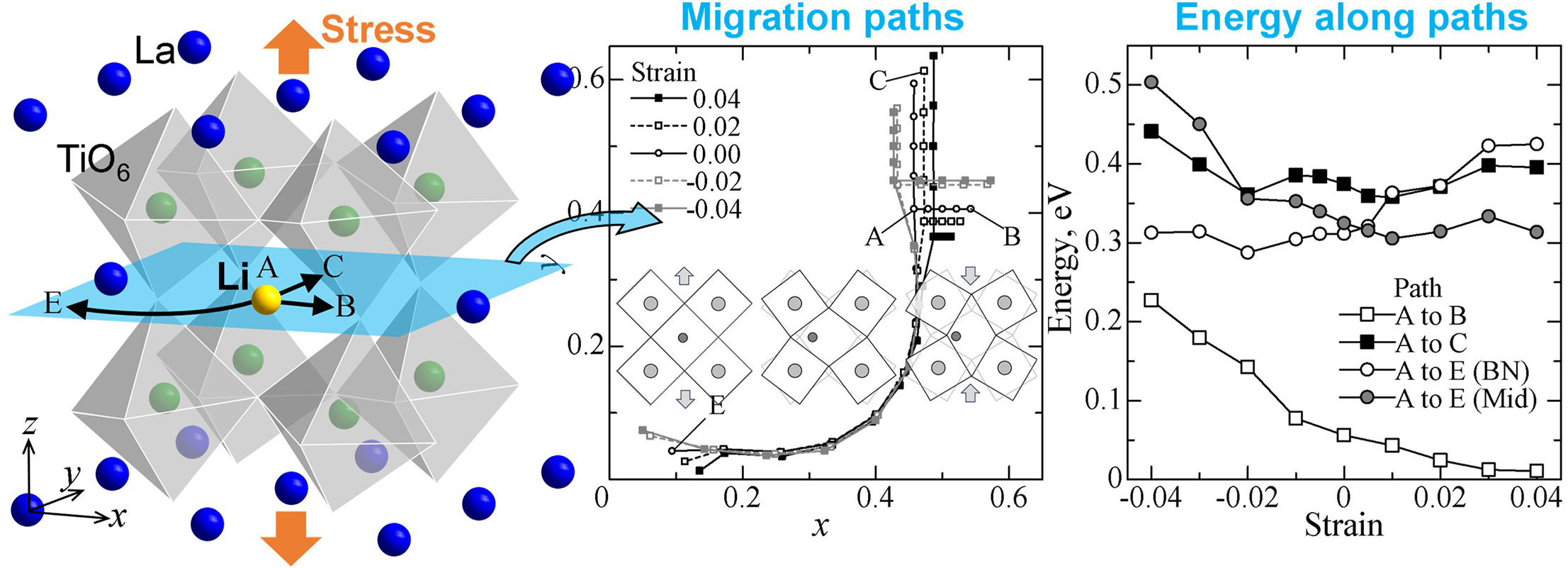
機械的なひずみや応力がイオンの移動経路やエネルギー障壁に与える影響に着目し、構造と輸送特性の相関を原子レベルで解析しています。とくに、結晶構造の変形挙動とイオンの拡散メカニズムの関係を第一原理計算を用いて明らかにすることで、力学的刺激による電気化学特性の制御可能性を探っています。構造–物性の双方向的理解を通じて、全固体電池材料の高性能化に向けた設計指針の構築を目指しています。
We investigate the effects of mechanical strain and stress on ion migration pathways and energy barriers, focusing on the atomic-scale correlation between crystal structure and transport properties. In particular, we employ first-principles calculations to elucidate the relationship between structural deformation and diffusion mechanisms, aiming to explore the potential for controlling electrochemical properties through mechanical stimuli. Through a bidirectional understanding of structure–property relationships, our research seeks to establish design principles for enhancing the performance of solid-state battery materials.
ペロブスカイト構造セラミックスの力学応答と相転移挙動
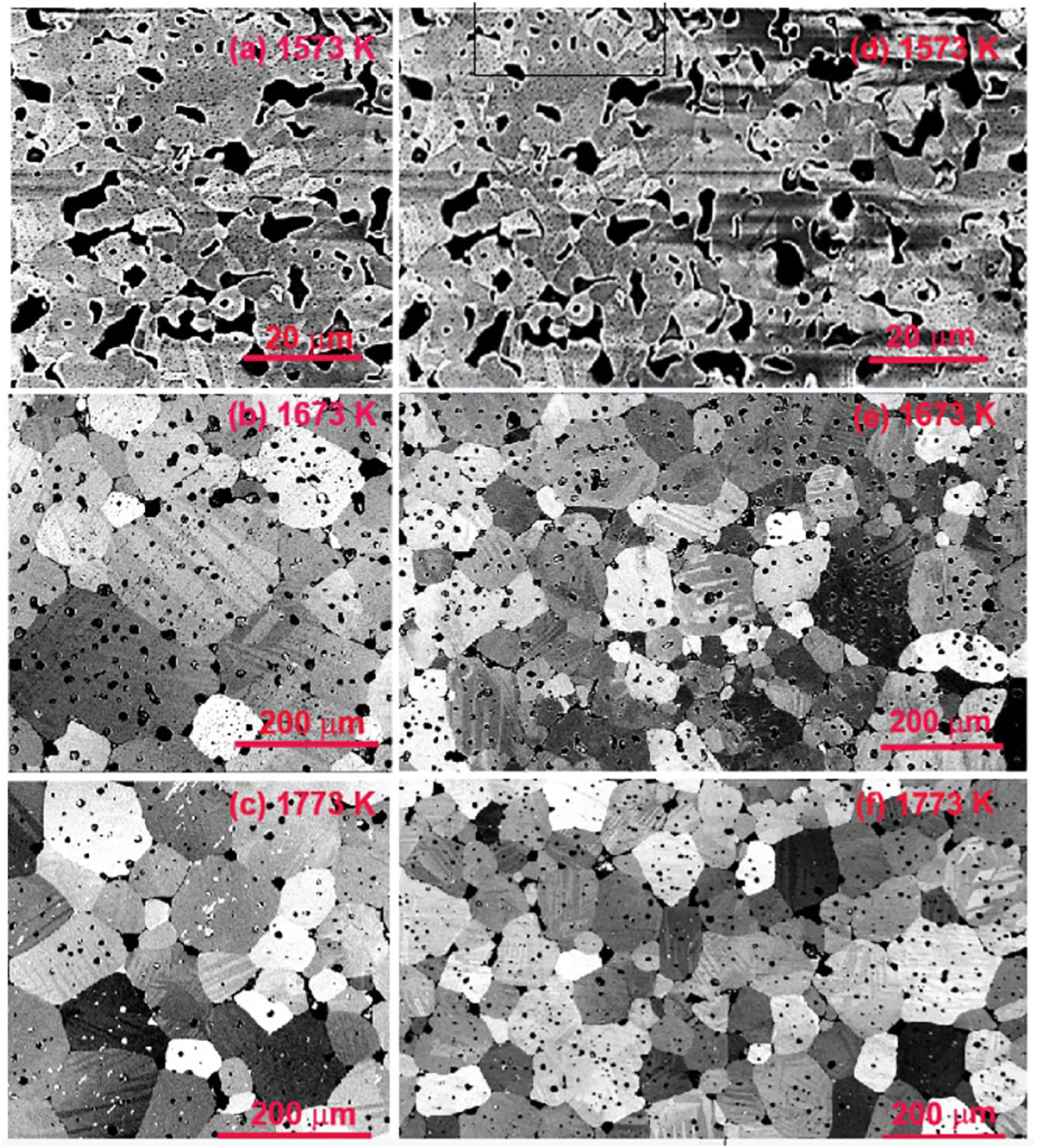
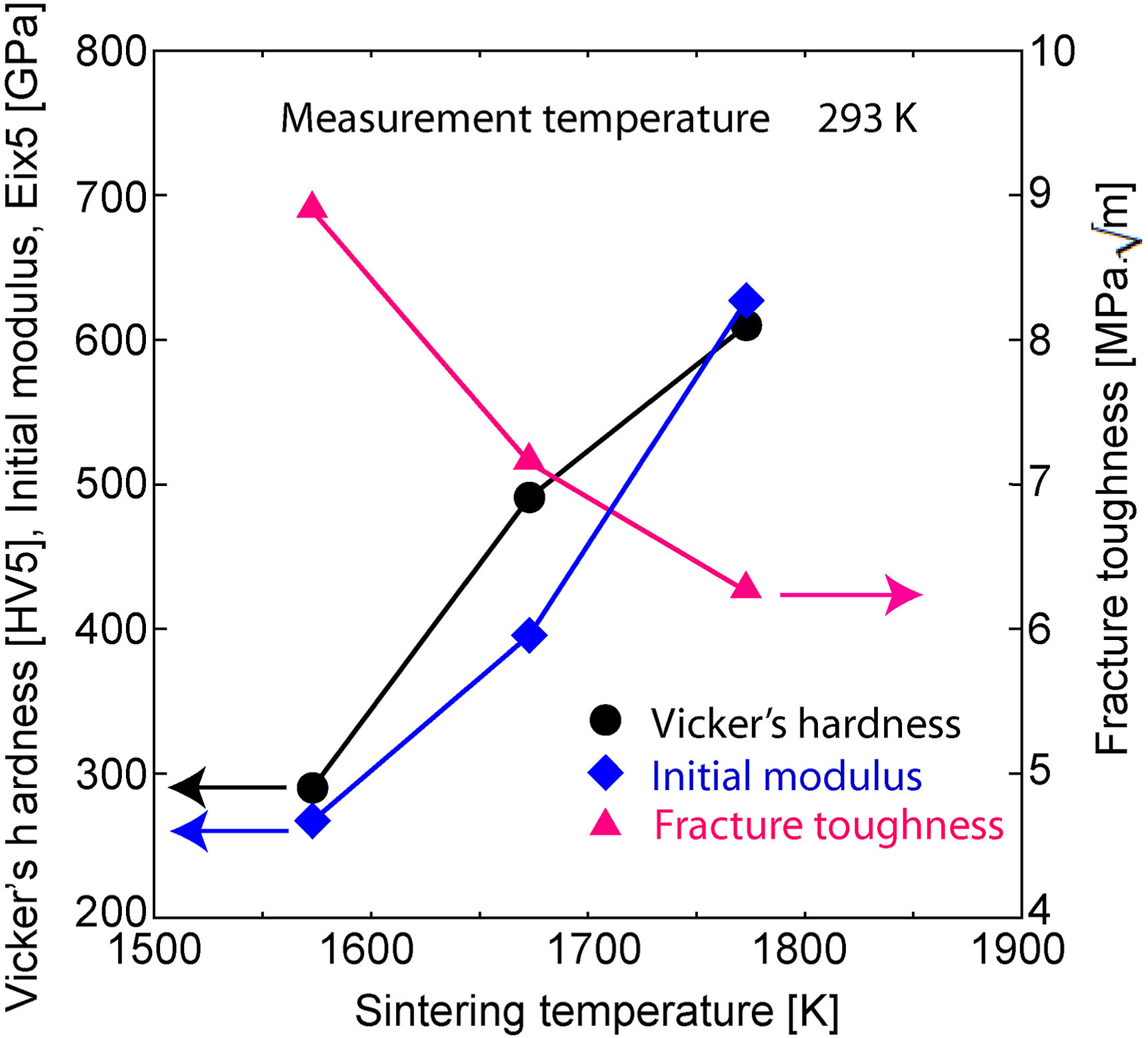
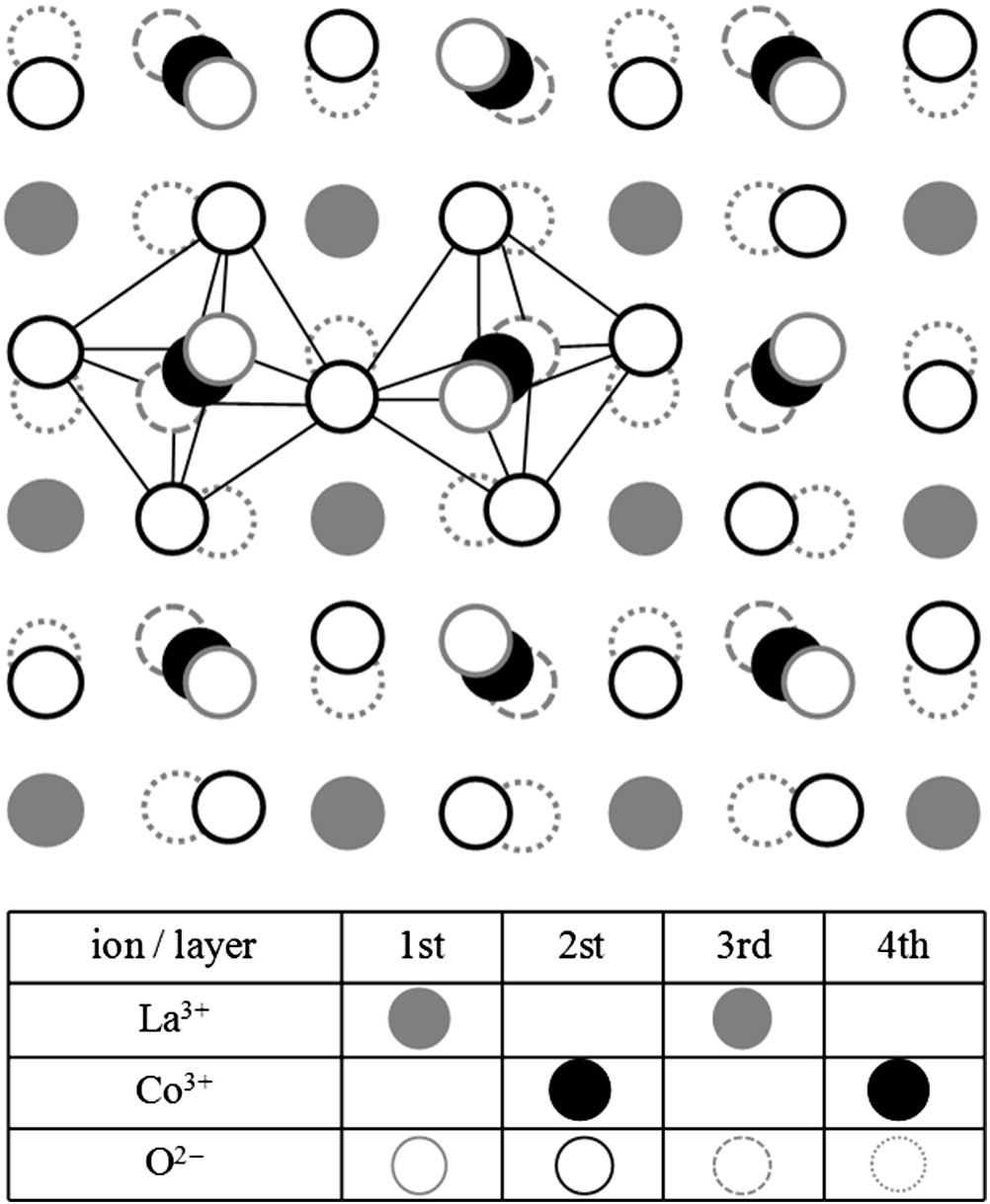
温度によって結晶構造が変化するペロブスカイト構造セラミックスを対象に、焼結条件の違いによって得られる粒径や気孔率などのマイクロ構造が、力学特性に与える影響を評価しています。とくに、相転移温度付近で見られるドメインのスイッチング挙動や応力–ひずみ曲線の非線形性に着目し、圧縮試験や熱機械解析を通じてフェロエラスティック応答の特徴を明らかにしています。これらの材料特性の評価は、当研究室にて試料作製から物性測定までを一貫して行うことで、ペロブスカイト材料の構造–力学特性に関する理解の深化を目指しています。
We study perovskite-structured ceramics that exhibit temperature-induced structural phase transitions, focusing on how microstructural features such as grain size and porosity—tuned by sintering conditions—influence mechanical properties. In particular, we evaluate ferroelastic responses through uniaxial compression testing and thermo-mechanical analysis, highlighting nonlinear stress–strain behavior and domain switching near the phase transition temperature. These material evaluations are carried out comprehensively within our laboratory, from sample preparation to characterization, aiming to deepen our understanding of structure–mechanical property relationships in perovskite ceramics.
分子動力学解析による微視構造と物性の相関解明
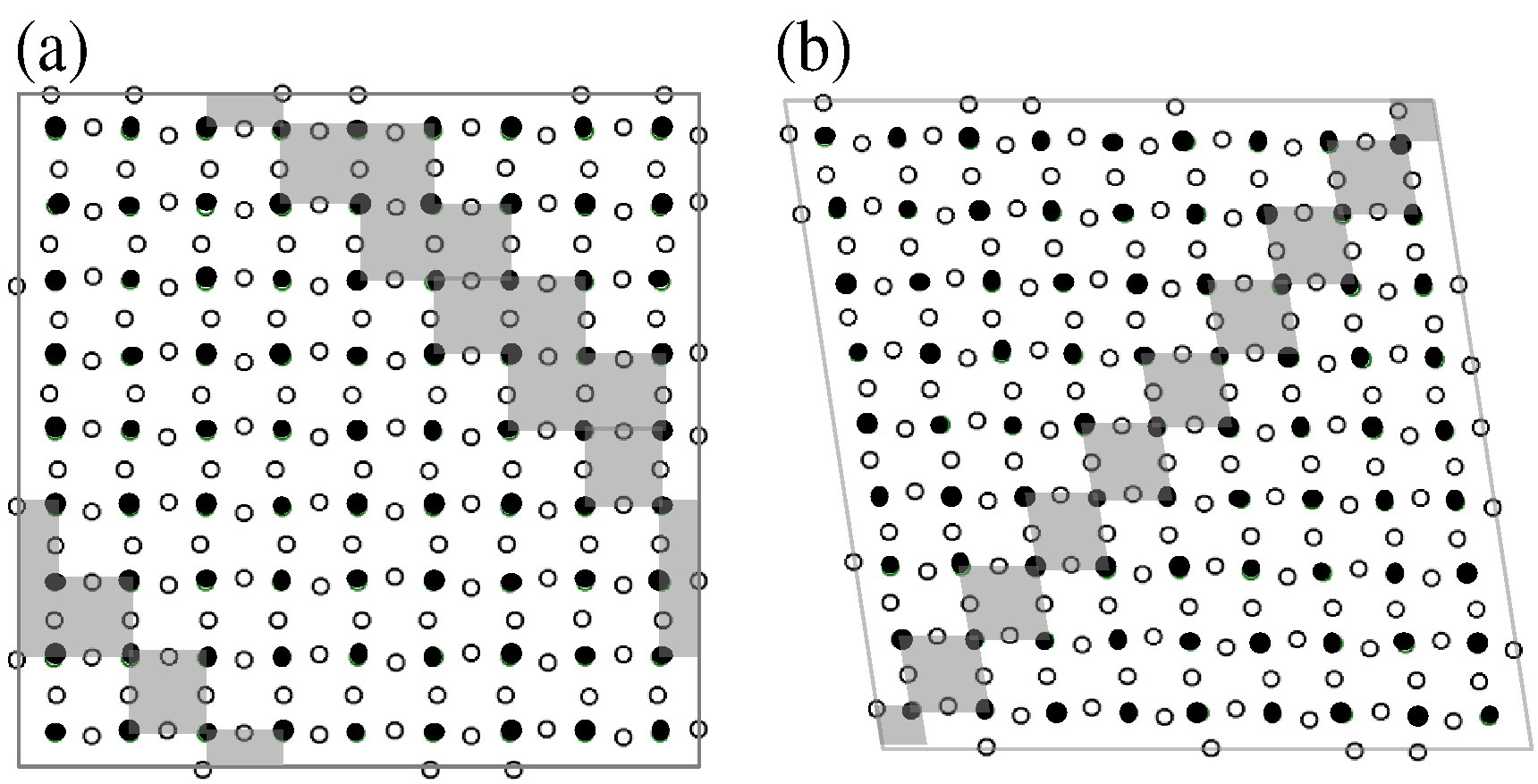
全固体電池材料の性能は、その微視構造に強く依存しており、とくに秩序構造やドメインの形成・変化が、イオン拡散や応力応答といった重要な物性に大きな影響を与えることが知られています。当研究室では、これらの構造–物性相関を原子スケールで明らかにすることを目的とし、分子動力学(MD)法を用いたシミュレーション研究に取り組んでいます。具体的には、結晶構造の秩序性やドメイン境界の変化が、リチウムイオンの輸送経路や応力下での変形挙動に与える影響を詳細に解析しています。これにより、材料内部の局所構造がマクロな特性に与える効果を理解し、全固体電池材料の設計指針の構築を目指しています。
The performance of solid-state battery materials is strongly influenced by their microstructural characteristics, particularly the formation and evolution of ordered structures and domains, which significantly affect ion diffusion and stress response behavior. In our laboratory, we employ molecular dynamics (MD) simulations to investigate these structure–property relationships at the atomic scale. Our research focuses on analyzing how variations in structural order and domain morphology influence lithium-ion transport pathways and deformation behavior under mechanical stress. Through these simulations, we aim to gain a fundamental understanding of how local structural features govern macroscopic properties, thereby providing design insights for the development of next-generation solid-state battery materials.
高分子–セラミック複合電解質の開発
高いイオン伝導性と機械的安定性を両立するため、高分子と酸化物セラミックスを組み合わせた複合電解質の開発に取り組んでいます。特に、ポリマーの柔軟性と無機材料の構造安定性を活かしつつ、ナノスケールでの相分離制御や界面構造の最適化を通じて、全固体電池向けに高性能な有機系固体電解質の実現を目指しています。
To achieve both high ionic conductivity and mechanical stability, we are developing composite electrolytes that integrate polymers with oxide ceramics. By leveraging the flexibility of polymers and the structural robustness of inorganic materials, our research focuses on nanoscale phase separation control and interface optimization, aiming to realize high-performance organic-based solid electrolytes for solid-state battery applications.